Posts

22. Barack Obama's favorite books, movies and music in 2018
Image
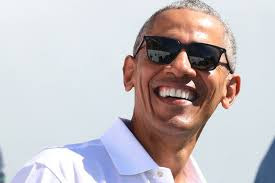
Former American President Barack Obama has posted on Facebook the list of books he read, the movies he watched and the music he listened to in the year 2018. Of all the books, his favorite was the one authored by his wife, Michelle Obama. This reflects that Mr Obama is a voracious reader like many other people and he doesn't shy away from letting people know what he reads. For people, it is a wonderful experience to learn about his post-presidency activities, for he has been an inspiration for so many. Here's what he says:  "As 2018 draws to a close, I’m continuing a favorite tradition of mine and sharing my year-end lists. It gives me a moment to pause and reflect on the year through the books, movies, and music that I found most thought-provoking, inspiring, or just plain loved. It also gives me a chance to highlight talented authors, artists, and storytellers – some who are household names and others who you may not have heard of before. Here’s my best...

21. ASEAN (Association of South East Asian Nations): Goals, members, successes and failures

Image
ASEAN emerged as a beacon of unity in South East Asia. It is one of the most successful bloc of countries after the European Union. ASEAN is the major reason behind the meteoric rise of the region to a new level of development and prosperity from a dismal position back in 1970s. As a matter of fact, the region is being viewed as the new "Golden Sparrow" by the super powers like US, China and Russia. Be it US' "Pivot to Asia" or China's "Belt and Road Initiative" , the region has become a fulcrum of world politics and has assumed immense strategic importance. Undeniably,  ASEAN is the force that catapulted the region from the clutches of backwardness to one of the most integrated, technologically advanced and developed area. ASEAN countries Fast facts about ASEAN Established on 8 August, 1967 in Thailand, Secretariat is in Jakarta 1981. Motto of ASEAN “one vision, one identity, one community”.  ASEAN flag has four colors ( Blue, Red...

20. Five major nontraditional security threats to Pakistan

Image
1. Climate change Pakistan was included among the most vulnerable countries (ranked 7th) to climate change, by the International Panel on Climate Change. Back in 2015, a heat wave in Karachi claimed more than 1500 lives. Pakistan has been repeatedly hit by long spells of drought, which adversely affects its agriculture sector. More worrisome is the rapidly decreasing per capita availability of water in the country. According to reports, per capita water availability has shrunk from 5000M3 in 1951 to 800M3 in 2018 and it will decrease further. Other vulnerable sectors are energy-related infrastructure, health, employment, food cycle and economy. Given the rapid increase in population, Pakistan will not be able to feed and protect its people. When people do not get enough to eat, it will be easy for the enemies of the country to exploit them. As multiple reports suggest: there is a direct link between poverty and terrorism. It is not difficult to contemplate that if do not take timel...

19. Why America participated in the First World War?

Image
The First World War was fought between the Central powers (Germany, Austria-Hungary, Italy) and Allied powers (Russia, Great Britain, France and US). From the outset, the Central powers were dominating the war. The German forces inflicted colossal damages on the Allied powers and were just a few days away from an outright victory. The war had begun in 1914 and until December 1917 the US remained neutral or had not participated in any offensive. American president, Woodrow Wilson, wanted to keep the US out of  the "European" conflict. As Wilson said “we are the only one of the great white nations that is free from war today and it would be crime against civilization for us to go in”.  However, a range of factors compelled the United States to take part in the war and spearhead the offensive against the Central powers. As a matter of fact, the US entry into the War turned the tables on the enemy and the Central powers were made to bite the dust. Warring parties (1914-191...

18. International Political Economy (IPE): Definition, Approaches, History and other aspects

Image
1. Introduction Two cases have been discussed to explain the concept of International Political Economy. Case 1:   The latest " Trade War " between the United States and China aptly describes the phenomenon of International Political Economy. American president, Donald Trump decided to put an end to 'unfair' Chinese trade practices through imposition of heavy taxes on the Chinese exports to the US. The US president imposed duties on the imports worth $250 billion from China , apparently, to bridge the massive trade deficit with the latter.  Instead of submitting to the unilateral measures by the US, China retaliated by imposing duties on the US exports worth $110 billion to China, in a tit for tat move. Owing to the  globalized nature of the world , the conflict between the two countries has adversely  affected economies worldwide particularly in developing countries . The 'Trade War' explains how deeply the political authorities are involved in th...

17. World War II and its causes

Image
Introduction  Famous dictum “War is an extension of Politics” . (1) World War 2 was one of the deadliest event in the history of mankind. As many as 6 crore people lost their lives and other 2.5 crore were wounded; millions were rendered homeless; infrastructure was reduced to debris in the entire Europe; entire cities were reduced to ashes; European economies were crippled on account of widespread destruction. In a nutshell,  Europe was completely devastated.  Causalities in various countries as the result of  WW2(5)  Allies: US, Soviet Union, Britain,  France, China, Australia and other small countries Axis Powers: Germany, Italy, Japan, Hungary, Romania, Bulgaria . Holocaust: It is a term used to describe the systematic killing of nearly 6 million Jews by Germany and its allies.  Total causalities: around 60-80 million    Causes of World War  II 1. Treaty of Versailles   The Article 231 of t...

16. Nuclear non-proliferation and disarmament: Initiatives taken to abolish nuclear weapons since 1945

Image
1. Baruch plan June 1946 Baruch Plan was presented for international control of nuclear technology by Bernard Baruch (US political consultant) to UN Atomic Energy Commission in June 1946. As the US was already a nuclear power by 1946, therefore, the purpose of this proposal was to restrict the secret nuclear program of the Soviet Union. 2. Atoms for peace 8 December, 1953 President Dwight D. Eisenhower (US) presented a bold and imaginative nuclear initiative to the United Nations. Although the “Atoms for Peace” plan was immensely popular and fundamentally altered the way the world treated nuclear energy, some contemporary observers contend that the policies and capabilities it produced inadvertently fueled the global spread of nuclear arms.  Its basic purpose was to share nuclear technology with all for peaceful purposes. 3. International Atomic energy Agency 1957 It came into existence on 29 July, 1957. Its headquarter is in Vienna, Austria. The IAEA serves 168 Membe...